Shop Your Own Closet: Ten Monochrome Outfits Hiding in Your Dresser
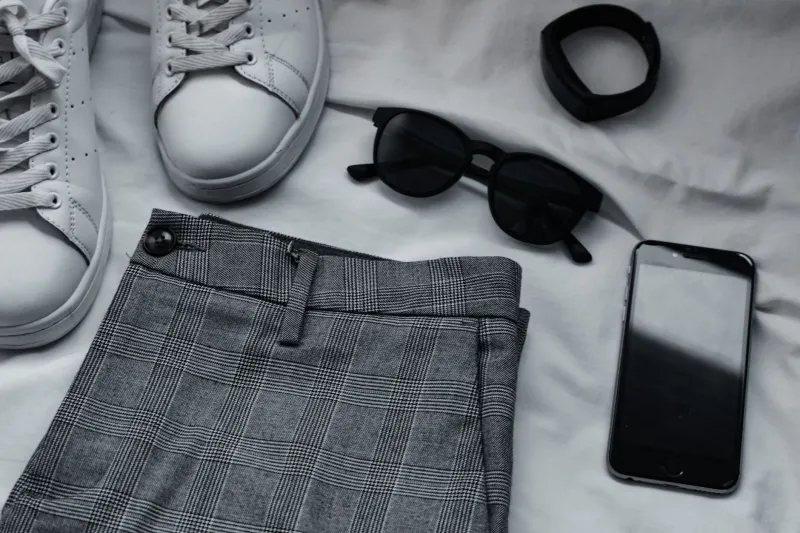
A wardrobe audit is a weekend chore that pays better than a sale. You do not need another black hoodie. You need to see the black and blue-black pieces you already own as a palette. Sharp monochrome is a system, not a shopping list.
Set aside an hour, put your phone on do not disturb, and work in daylight. Fluorescent bathroom light will lie to you about undertone. A window and a mirror are enough.
Step One: Pull Everything
Pull every black and blue-black item you own: tops, bottoms, outerwear, shoes, bags, belts, hats. Put it all on the bed. Yes, all of it. The point is to stop treating your closet as a series of separate outfits and start treating it as inventory.
Make three piles as you go: wear now, repair, and retire. A faded black tee with a stretched collar goes in repair or retire. A blue-black denim jacket with a broken zipper pull goes in repair. Be honest about what you actually reach for.
Step Two: Sort by Undertone
You are looking for three groups: true black, blue-black, and faded black or charcoal. Hold pieces next to each other in daylight. True black reads neutral. Blue-black has a navy or ink cast. Faded black reads gray next to a deep black.
This matters because a faded black tee next to an ink-black blazer can look like a mistake if you are trying for sharp. It can look great if you are using it as a texture layer on a weekend. The same piece changes job depending on what it sits next to.
If a piece reads gray next to your deepest black, do not force it into a commute outfit as the base. Use it as a mid-layer, a weekend top, or a texture contrast. Keep the sharpest, darkest pieces for the outfits that need to read clean from across the room.
Step Three: Sort by Texture
Monochrome needs surface. If everything is matte cotton, the outfit goes flat. Make three texture piles: matte, sheen, and ribbed or knit. Matte means cotton, wool, fleece, and canvas. Sheen means nylon, leather, coated cotton, and smooth technical fabric. Ribbed or knit means sweaters, thermal tops, and textured trousers.
A good monochrome outfit usually has at least two textures. A blue-black tee with black wool trousers works because the surfaces differ. A black tee with black jersey sweatpants can work on a weekend, but it needs a sheen or a structured shoe to keep it from looking like pajamas.
Step Four: Sort by Formality
Make three loose piles: sharp, daily, and technical. Sharp is tailored trousers, blazers, dress shirts, derbies, loafers, and structured bags. Daily is tees, jeans, hoodies, overshirts, and sneakers. Technical is shells, nylon cargos, trail sneakers, and weather-ready layers.
The magic is in mixing two piles, not living in one. Sharp plus daily reads like a city commute. Daily plus technical reads like a weekend with weather. Sharp plus technical is the stretch, but it can work if the colors are tight and the textures are deliberate.
The Ten Outfits
-
The Ink Tee and Sharp Trouser, commute. Blue-black heavyweight tee, black pleated trousers, black leather derbies, black belt. The tee keeps it from looking like a suit. The trouser keeps it from looking like a gym run.
-
Denim Frame, weekend. Blue-black denim jacket, black straight jeans, black boots, black cap. Two denims in different undertones work if the jacket is darker or cleaner than the jeans.
-
Overshirt, Not Overthought, commute. Black overshirt, blue-black long-sleeve tee, black jeans, black sneakers. Roll the overshirt cuff once to show the blue-black layer.
-
Knit and Nylon, weekend. Black merino crew, blue-black nylon cargos, black technical sneakers. The knit softens the cargo. The nylon keeps the whole thing from reading like a sweater-and-jeans default.
-
The Soft Blazer, commute. Black unstructured blazer, blue-black tee, black jeans, black loafers. This is the easiest way to make denim read sharp without a tie.
-
Shell Rule, weekend weather. Black technical shell, blue-black hoodie, black tapered trousers, black trail sneakers. Keep the trousers tapered so the shell does not swallow you.
-
Ribbed and Wide, commute to dinner. Black ribbed knit, blue-black wide-leg trousers, black ankle boots. The ribbing adds texture. The wide leg adds shape. No extra accessories needed.
-
All-Black, Three Textures, commute. Black shirt, black wool trousers, black leather derby, black belt. Matte shirt, dry wool, polished leather. Same color, three surfaces, zero boredom.
-
Coat Check, weekend. Blue-black jeans, black wool coat, black turtleneck, black Chelsea boots. This is the one to photograph and keep on a hook for cold Saturdays.
-
The Track Pant Pivot, weekend. Black tapered track pant, blue-black zip hoodie, black cap, black sneakers. Keep the pant clean and the hoodie sharp. This is errands, not a nap.
The No-Buy Rule
If an outfit calls for a piece you do not own, swap in the closest match by texture and formality. Do not open a shopping tab. The audit is supposed to prove the system works with what is already there. If you still see a real gap after ten outfits, write it down and wait a week. Most gaps are styling gaps, not inventory gaps.
Photograph the ten outfits. Keep three on rotation near the front of the closet. Notice which combinations actually get worn. That is your real capsule, not the one you planned in your head.
Your closet already has the inventory. The audit just makes it legible. Pull it apart, sort it by ink and surface, and put it back together with intent. That is how a blue-black wardrobe starts working like a system.