Concrete to Silver: The Tonal Gray Uniform That Outworks All-Black in 2026
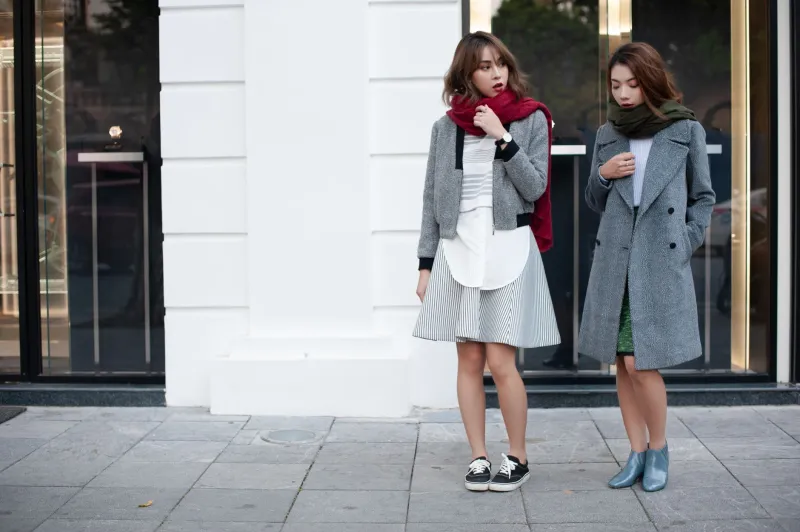
Black is the safe answer. It is also the answer everyone gives, which is why a full black fit on the platform at 8:40 a.m. reads less like a decision and more like a default. Gray asks for a little more thought, and it pays that thought back. Light hits brushed wool differently than it hits ripstop. Silver reads cool next to charcoal. The whole thing looks considered even when you threw it on in four minutes flat.
This is the practical version: the scale, the rule for mixing temperatures, three formulas you can wear this week, and the add-ons that actually earn their closet space.
Why Gray Outperforms Black on a Real Commute
Black absorbs detail. Seams, ribbing, pleats, the difference between a $40 hoodie and a $200 one — all of it vanishes into the same flat mass. Gray shows construction. It also survives daylight, which matters when half your week happens under office fluorescents and the other half under streetlights. And in the messy stretch from November through March, gray is simply more forgiving of road salt, bus-seat grime, and the general grit of American cities than a deep black that goes chalky the second it dries.
Gray also layers better. When you stack black on black on black, the eye has nothing to separate one garment from the next. Two grays and a black read as an outfit instead of a silhouette.
Learn the Scale Before You Shop
Think of gray in four rungs, not forty shades:
- Silver / light gray — pearl, mist, heather. Airy, best in knits and nylon.
- Mid gray — oxford, cement, heather jersey. The workhorse.
- Slate / gunmetal — cool and blue-leaning. Ideal for tailoring and coated fabrics.
- Charcoal / asphalt — near-black, the anchor of the whole system.
The mistake people make is living on one rung. An all-mid-gray outfit looks like a delivery uniform. You want two rungs minimum, three when you can manage it, plus one hard black element to give the eye a place to land.
The Temperature Rule Nobody Explains
Gray splits into warm and cool. Warm means greige, taupe, mushroom, oatmeal, and anything with a brown undertone. Cool means slate, steel, and blue-gray. Both are fine. Mixing them at the same value is what goes muddy — a warm taupe sweater over cool gunmetal trousers fights itself, and the result reads washed out rather than tonal.
Three fixes, in order of preference:
- Stay in one family for the whole outfit, then let texture do the separating.
- Bridge with charcoal or black, which sits between the two temperatures without picking a side.
- Bridge with white, a tee at the collar or a plain sock, to reset the eye between warm and cool zones.
If you are shopping online and can't tell the temperature, buy the cooler option. Cool grays are more forgiving under artificial light and photograph closer to how they look in person.
Three Formulas That Hold Up
The Commute
Charcoal wool topcoat, mid-gray merino crewneck, slate straight-leg trouser, black leather derby, black gloves. Two surfaces that catch light differently — brushed wool against smooth merino — and one near-black anchor at the feet. Swap the crewneck for a heathered sweatshirt on casual Fridays and nothing breaks.
The Weekend
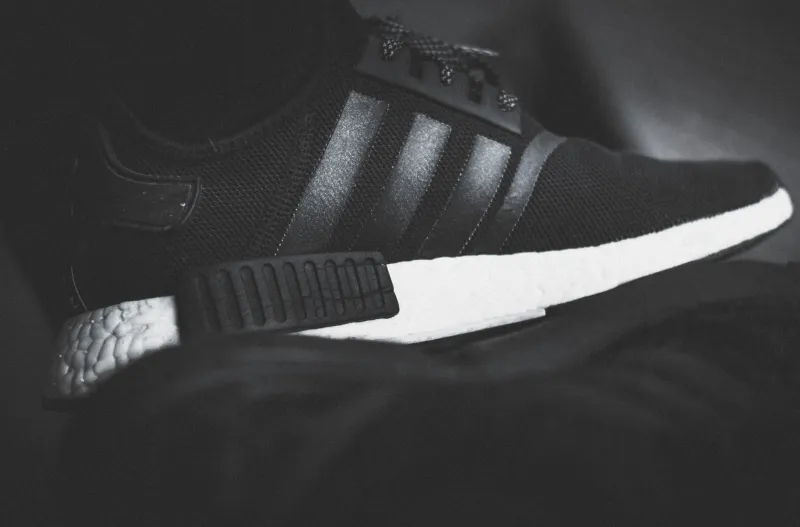
Silver-gray nylon bomber, heather-gray sweatshirt, graphite denim, gray suede runner, tonal cap. This is the easy one. The nylon's sheen against matte fleece does all the work, so you can wear it with your eyes closed and still look intentional on a Saturday errand loop.
The Late Night
Black ribbed knit as the base, a charcoal overshirt left open, dark gray wide-leg trouser, black chunky boot, and exactly one piece of silver hardware — a chain, a watch, a zipper pull. This is where gray genuinely beats black: under bar lighting, a black-on-black outfit flattens into a shadow, while charcoal next to a black base keeps its edges.
Where the Money Should Go
Spend on the pieces that set the tone and skip the pieces that just fill space.
Worth it: a charcoal overcoat or a heavy overshirt, mid-gray merino knitwear, one properly cut gray trouser, and a silver-gray shell or bomber. Those four carry everything else.
Not worth it: cheap gray tees that go translucent in sunlight, gray socks that pill after three washes, and any knit described only as "heather" with no fiber content listed. Gray is unforgiving of bad fabric in a way black never is.
Capsule Add-Ons That Pull Their Weight
- A gray flannel overshirt, mid-weight, worn open over anything.
- Gray nubuck or suede footwear — the fastest way to soften a hard-edged tonal fit.
- A tonal gray beanie or scarf in the same temperature family as your coat.
- A small gray nylon crossbody so your bag stops breaking the line.
Five Rules That Save the Whole Look
- One black anchor per outfit, no more. Shoes, gloves, or a base layer — pick one zone.
- Two textures minimum. Flat against flat is what makes gray look cheap.
- If you can't match the shade, match the sheen instead.
- Keep the palest gray off your face if you're running on four hours of sleep; put mid-gray at the collar and silver at the sleeve.
- One hardware moment, maximum. Two zippers and a chain starts to look like a costume.
Gray is not the timid middle ground between black and white. Built properly, it is the most three-dimensional neutral you can wear in a city that spends half the year gray itself — which is exactly why it reads sharp instead of invisible.