Blue-Black at the Desk: Five Formulas That Read as Streetwear Without Reading as a Problem
The dress-code line is not where most people think it is. It rarely sits at the sneaker or the hoodie. It sits at fabric quality, silhouette control, and whether your shoes look like they've been in a fight. Get those three right and a blue-black streetwear wardrobe can walk into a business-casual office and get compliments instead of a memo.
These five formulas are ordered from safest to most adventurous. Adjust based on how client-facing your week actually is.
Formula 1: Fine-Gauge Knit, Pressed Trouser, Clean Low-Profile Sneaker
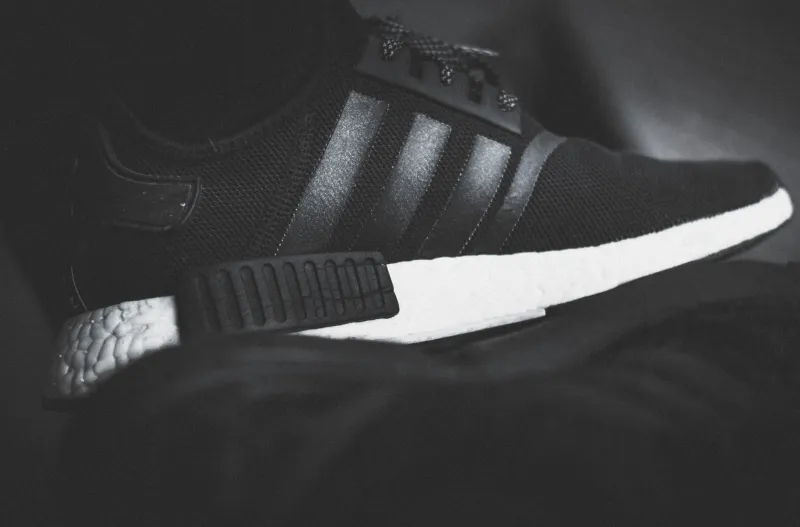
The baseline. A 14-gauge merino crewneck in blue-black, a straight or gently tapered wool-blend trouser with an actual crease, and a leather sneaker with no visible logo and a wiped sole.
Why it works: it borrows the sneaker from streetwear and pairs it with the two most business-casual objects in menswear. The knit does the work a dress shirt would do, but softer and without a collar to argue about.
Fit notes: the knit should hit at the hip bone, not below it. Trouser break should be slight — one soft fold, not a stack. If the trouser puddles on the sneaker, the outfit slides from "considered" to "teenager" in one glance.
Formula 2: Wool Overcoat Over a Thin Hoodie
This is the formula people get wrong and then blame the hoodie. A hoodie under an overcoat only works when the hoodie is fine — a lightweight loopback or a smooth interlock, not a heavyweight fleece with a pouch pocket that bunches under the coat. Matching drawcords, or no visible drawcord at all.
Why it works: the coat supplies the structure, the hoodie supplies the ease, and the monochrome palette keeps the two from competing. Tonal blue-black on blue-black is the key — a black hoodie under a navy coat reads as an accident.
Where the line sits: hood down indoors, always. Some offices will still object to a garment with a hood attached. Save this one for internal days and creative-floor meetings.
Formula 3: The Track Trouser, Office Edition
Actual athletic track pants are not going to fly in most US offices, and they don't need to. A pressed track trouser in a wool blend or a dense ponte does the same job with a crease down the front and a clean waistband. Pair with an overshirt, a shirt-collar knit, or a fine turtleneck.
Why it works: you keep the relaxed leg and the elastic-back comfort, but the fabric and the crease signal effort.
Fit notes: the leg should have a straight fall from the hip, no taper at the ankle that grabs the shoe. Skip the side stripe — that's the one detail that will get you flagged.
Formula 4: Three-Value Tonal Layering
The most visually interesting of the five, and entirely safe. Build the outfit from three shades within the same family: a blue-black base layer, a near-black mid layer, and a true-black outer piece — or reverse it. Add texture instead of contrast: a ribbed knit, a brushed wool overshirt, a matte shell.
Why it works: the eye reads depth without ever seeing a second color, which is exactly the effect BLUEBLACK keeps coming back to.
Fit notes: the inner layer must be the slimmest; each layer out gets a little more room. If the mid layer is wider than the coat, you get bunching at the shoulder seam and the whole thing looks borrowed.
Formula 5: The Relaxed Suit, Broken Up
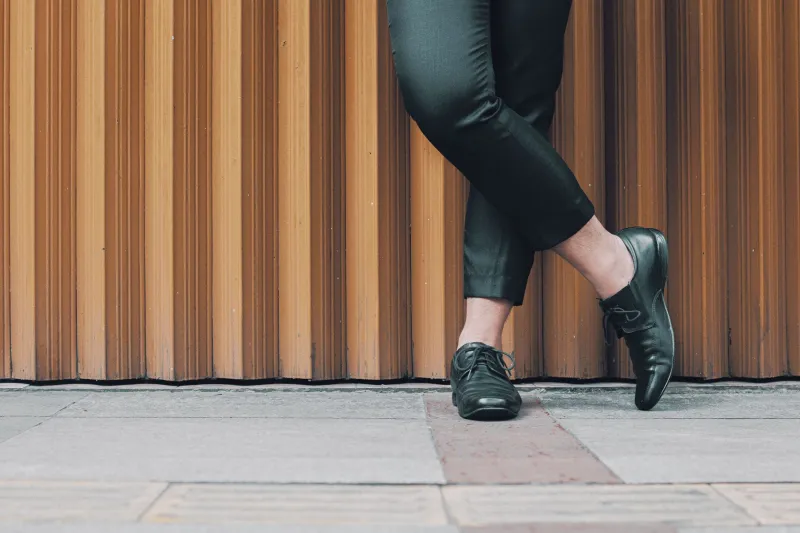
A blue-black suit with a soft or unstructured shoulder, worn over a fine merino tee or a thin turtleneck instead of a shirt. Minimal leather sneaker in the same value, or a plain derby if you have a meeting that matters.
Why it works: the relaxed shoulder is what makes this read as streetwear-adjacent while the suit silhouette keeps it firmly professional. It's the most advanced formula here, but it's also the one that photographs best.
Where the line sits: no visible branding, no cropped jacket hem unless your office is genuinely creative, and no sneaker that shows wear at the toe. A scuffed toe box undoes a $900 suit faster than anything else on this list.
Where the Line Actually Sits
Across all five, the same four things decide whether you get sent home:
- Logos and graphics. Boxy prints, chest branding, slogan graphics. Solid color and texture only.
- Fabric grade. Sweatshirt fleece reads as loungewear; merino, dense cotton interlock, wool blends, and bonded fabrics read as clothing you chose on purpose.
- Shoe condition. Clean soles, no creasing at the toe, laces in good shape. This is the single most common failure point.
- Proportion discipline. Oversized tops and wide trousers are fine separately; together they need intention — a cropped jacket, a defined waist, or a considered break.
A Quick Fit Checklist
- Shoulder seam sits at the edge of the shoulder, not past it.
- Sleeve ends at the wrist bone when arms are at your side.
- Trouser hem hits the shoe with one break maximum.
- Knit layers don't bunch at the waistband under a coat.
- Everything passes the seated test — sit down, cross your legs, check the mirror.
None of this requires a new wardrobe. It requires picking the better version of pieces you already own — the merino instead of the fleece, the leather sneaker instead of the runner, the trouser with the crease instead of the jogger. Blue-black doesn't get you sent home. Sloppy fabric does.